Thrusters
Cold-gas nitrogen nozzles, tank sizes, and the Rocket layout that is not road-approved.
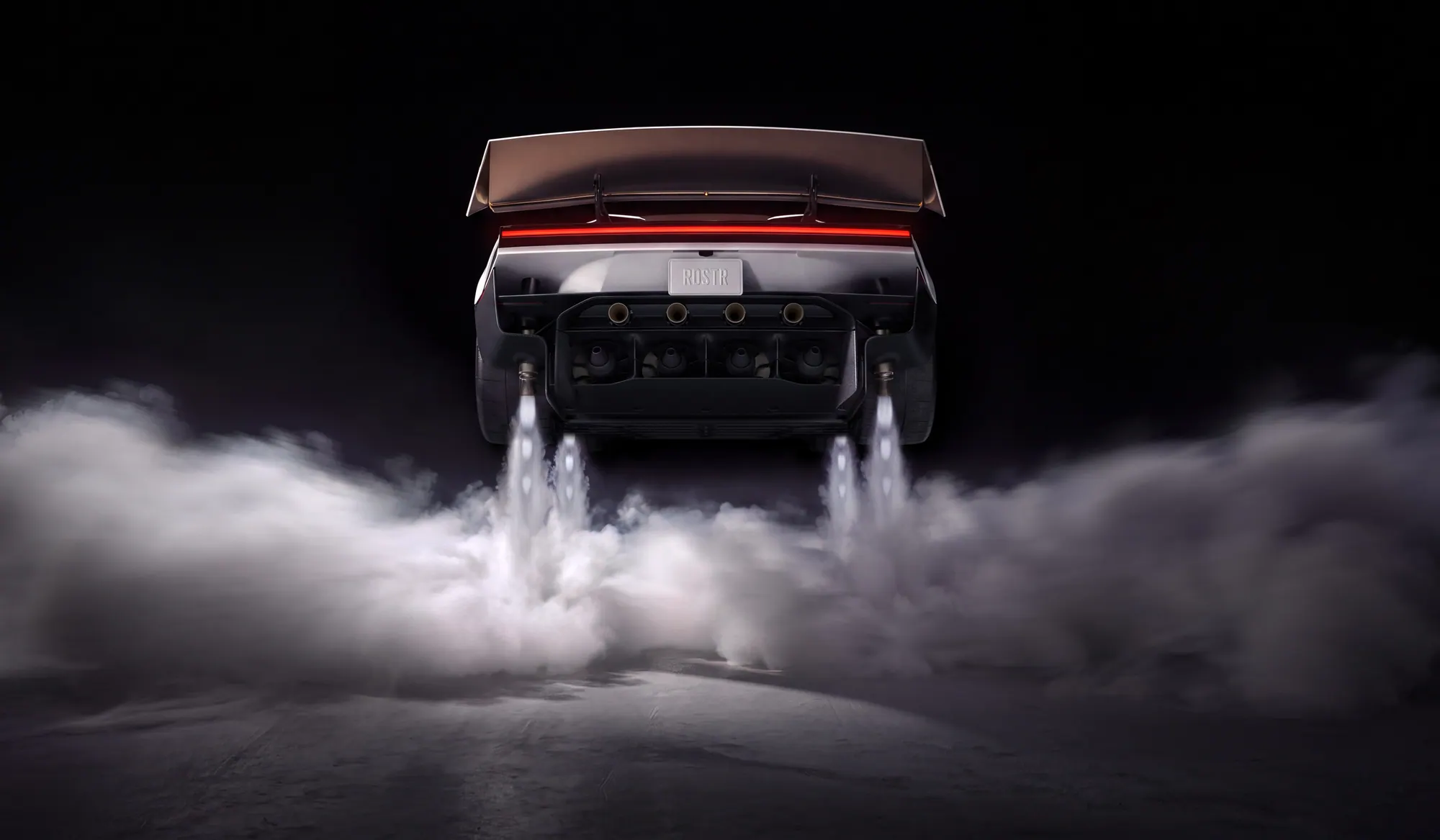
Key facts
- Gas
- nitrogen
Called air on stage.
- Thrust force
- over 80 kN
- Rocket
- Not approved for public roads
What it is
The gas is described as nitrogen, and it was called air on stage. Thrust is described as four rear nozzles and a tank of about 200 litres in the trunk. Rocket adds six thrusters — one behind each wheel, pointing down, and two at the nose — plus a tank of about 400 litres in place of the passenger seat. The total quoted is about 600 litres.
Thrust is described as about five seconds per fill. Refill times conflict: 6–7 hours for all 600 litres, 2–6 hours, and a 30-minute target. COPVs are described up to 10,000 psi, while a screen reading of 5,500 psi is also reported. A single valve on an Optimus actuator is described, with a thrust claim over 80 kN. Tesla has said every usable void is packed with COPVs. The Rocket trim is not approved for public roads.
Figures below come from Tesla posts or from engineers speaking to outlets. Where sources disagree, the spec sheet says so.
More from Technology
 Image: Tesla, Inc.
Powertrain
Two rear motors, no differential, and the power figures that do not agree.
 Image: Tesla, Inc.
Battery
4680 cells, an 800 V pack, and a capacity Tesla has not published.
 Image: Tesla, Inc.
Charging
A 500 kW peak claim, and four charge-time wordings that do not match.
 Image: Tesla, Inc.
Suction system
Four fans and drop-down skirts that are described as holding the car at low speed.